

Do not use red food coloring in hummingbird nectar; it adds risk and no benefit.
Hummingbird care looks simple, yet small choices matter. If you have ever wondered will red food coloring hurt hummingbirds, you are not alone.
I have worked with backyard feeding setups for years and tested many methods. Below, I explain what the science shows, what experts advise, and what I have learned in real yards. You will leave with safe steps that help birds, not hype.
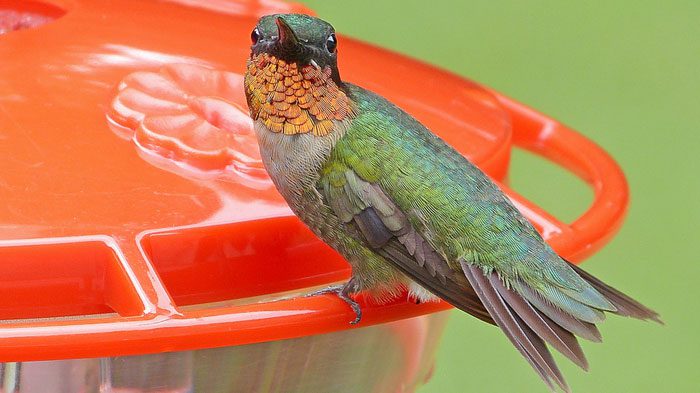
Source: allaboutbirds.org
Why people consider dye and what hummingbirds actually see
People add dye because feeders are often red. Red stands out in gardens. It can signal flowers and nectar. So the question comes up again and again: will red food coloring hurt hummingbirds?
Hummingbirds do see red very well. But they do not need red liquid. The red parts of the feeder already catch their eye. Clear nectar is best. It keeps the setup simple and safe.
If the feeder is not red, a red base or a red port ring is enough. Bright flowers near the feeder also help. You can use red ribbon on the pole. You do not need to tint the food itself. When you ask will red food coloring hurt hummingbirds, remember the birds come for sugar water, not the dye.

Source: journeynorth.org
What we know about red food coloring and hummingbirds
Here is the careful answer. There is no strong, peer‑reviewed study that proves small amounts of FD&C Red No. 40 are deadly to hummingbirds. But there is also no good study that proves it is safe for daily, long‑term use in tiny birds with fast metabolisms. That is a big gap.
Toxicology work in other animals shows that dyes can stress the liver and kidneys at certain doses. Some dyes also change gut bacteria. Birds are not small people. Their systems move fast. Their bodies work at the edge. So the safe margin is thin. Many wildlife groups and avian vets advise against dye. They do so out of caution.
Commercial red nectars often add preservatives. Those additives are made for shelf life, not bird health. They can irritate the gut. They can speed fermentation. When we ask will red food coloring hurt hummingbirds, we must include those extra ingredients too. The risk grows when heat is high and feeders sit in the sun.
There is no benefit from dye. The feeder color does the job. The dye adds an unknown. When in doubt, skip it. The most honest answer to will red food coloring hurt hummingbirds is this: it may, and there is no upside.
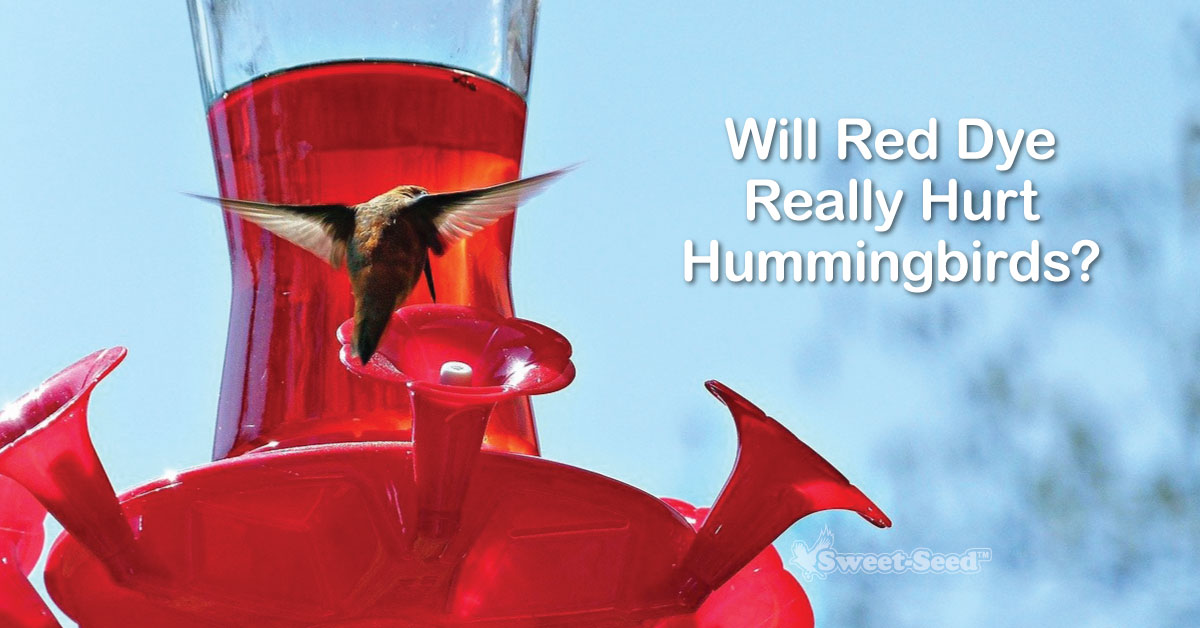
Source: sweet-seed.com
The safest nectar recipe and feeder setup
Use a simple recipe. It matches the sugar level of many flowers and keeps birds active and hydrated.
Steps:
- Mix 1 cup white granulated sugar with 4 cups clean water.
- Stir until dissolved. Warm the water if needed. Cool before filling.
- Do not add dye, honey, brown sugar, or vanilla.
- Store extra nectar in the fridge for up to a week.
Care and placement:
- Change nectar every 1 to 2 days in hot weather. Every 2 to 4 days in cool weather.
- Rinse the feeder with hot water each time. Scrub ports with a small brush.
- Deep clean weekly with 1 part white vinegar to 4 parts water. Rinse well. You can also use a 1:9 bleach mix if mold is heavy. Rinse until no smell remains.
- Hang the feeder in shade or dappled light. This slows spoilage.
- Use an ant moat. Use bee guards if bees crowd the ports.
- Keep the area clean. Pick up drips. Move the feeder if wasps take over.
A clear plan makes the question will red food coloring hurt hummingbirds fade away. The safest plan needs no dye and keeps nectar fresh.

Source: journeynorth.org
Signs of trouble and how to respond
Watch the nectar. If it turns cloudy, toss it. If you see black mold, deep clean at once. If the feeder leaks, replace a worn gasket. Drips invite ants and wasps.
Watch the birds. If you see weak perching, puffed feathers in warm weather, or birds that sit with eyes closed, call a licensed wildlife rehabber. Remove any risky nectar. Clean and refill with fresh mix. When people ask will red food coloring hurt hummingbirds, they often overlook mold and heat. These are real, common threats you can fix fast.
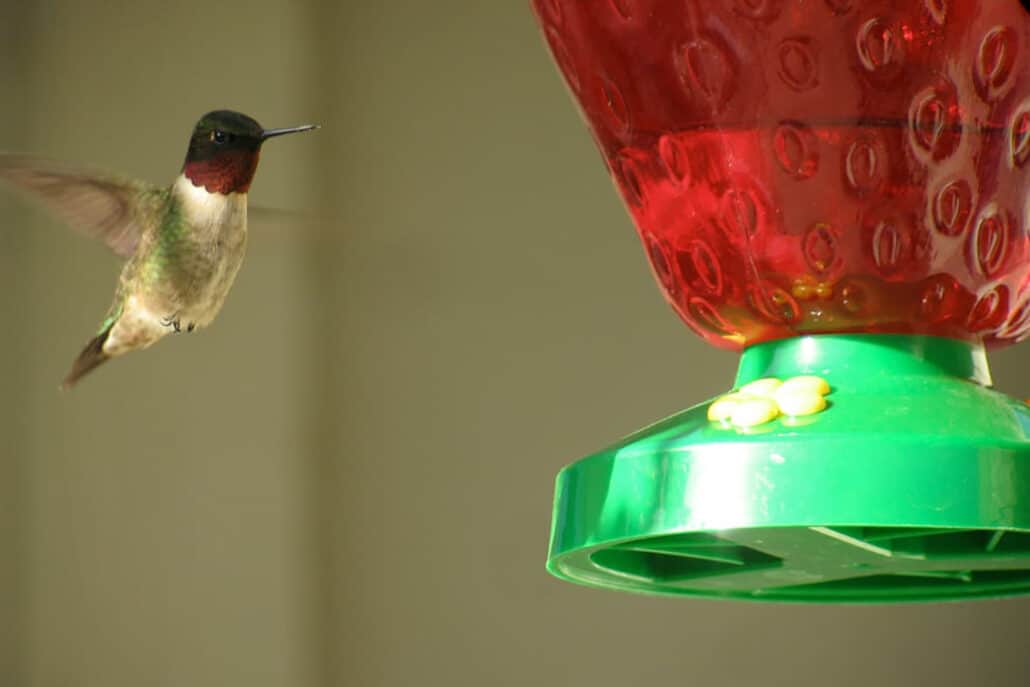
Source: bwdmagazine.com
Common myths debunked
- Red dye makes feeders more attractive: The feeder’s red parts already attract birds. Clear nectar works just as well.
- Stronger sugar mix gives more energy: Do not go stronger than 1:4. Thick syrup can cause dehydration and kidney stress.
- Honey is natural, so it is better: Honey ferments fast. It can grow fungi that harm birds.
- Brown or raw sugar is healthier: These have molasses and minerals. Extra iron can harm birds. Use white granulated sugar only.
- You must boil the water every time: Use clean tap or filtered water. Heat helps dissolve sugar. Boiling is optional if your water is safe.
- Organic means safer: Some organic sugars still contain more minerals. Stick with plain white cane or beet sugar.
- Dye helps you see nectar levels: Use a clear feeder body with a side scale. No dye needed.
If you still wonder will red food coloring hurt hummingbirds, remember that none of these myths shows a real benefit from dye.

Source: fieldguidetohummingbirds.com
My field notes and lessons learned
Over three summers, I ran two feeders 20 feet apart. Both had red bases. One had clear nectar. The other used a store mix with red dye. Birds used both at first. Within a week, traffic fell at the dyed mix. The nectar also soured faster in heat. After I switched both to clear nectar, visits rose and stayed high.
Small tweaks matter. I moved the feeder into shade by noon. I changed nectar daily during heat waves. I planted scarlet salvias nearby. Each change helped more than any dye ever could. When neighbors ask will red food coloring hurt hummingbirds, I say this: it is not needed, and it can get in the way of better steps.
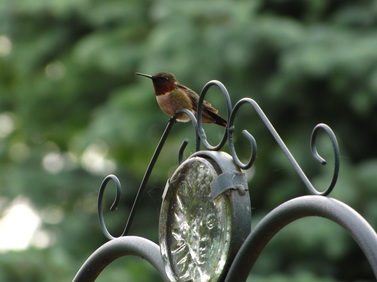
Source: mainegardenideas.com
Frequently Asked Questions of will red food coloring hurt hummingbirds
Will red food coloring hurt hummingbirds?
There is no proven benefit and possible risk over time. Use clear 1:4 sugar water and a red feeder instead.
Do hummingbirds need red nectar to find the feeder?
No. They key in on red parts of the feeder and on flower shapes. Clear nectar is perfect.
Is FD&C Red No. 40 safe for people but not for birds?
Human safety rules do not map to tiny birds with fast metabolisms. With no clear bird data, experts advise caution.
Are commercial red nectars okay in a pinch?
They often contain preservatives and dyes. If you must use them once, switch back to clear nectar as soon as you can.
What sugar should I use for the best nectar?
Use plain white granulated cane or beet sugar. Avoid honey, brown sugar, raw sugar, and artificial sweeteners.
How often should I change the nectar in summer?
Every day or every other day in hot weather. Keep feeders shaded to slow spoilage.
Will a stronger mix help during migration?
Stick to 1:4 even during migration. Offer more feeders instead of thicker syrup.
Conclusion
Dye is a distraction. It adds risk, cost, and no real gain. Clear 1:4 nectar, a red feeder body, good shade, and tight cleaning habits do all the heavy lifting. If someone asks you will red food coloring hurt hummingbirds, you can now answer with confidence and show them a safer setup.
Put out a fresh, dye‑free feeder this week. Track visits for two weeks and note the change. If you found this guide useful, share it with a friend, subscribe for more backyard tips, or leave a question and I will help you fine‑tune your setup.