

Grain free sensitive stomach cat food can ease digestion and reduce vomiting.
If your cat struggles with soft stools, gas, or hairballs that end in pukes, you are in the right place. I help pet parents choose grain free sensitive stomach cat food that is safe, balanced, and simple to use.
In this guide, you will learn what it is, who needs it, how to pick it, and how to switch without stress. You will leave with a clear plan and real tips you can trust.

What Is Grain Free Sensitive Stomach Cat Food?
Grain free sensitive stomach cat food removes grains such as corn, wheat, barley, and rice. It focuses on animal protein first. It often uses sweet potato, peas, or tapioca for carbs. The goal is easy digestion.
Sensitive stomach means your cat has signs like loose stool, vomiting, gas, or food refusal. It can also mean gurgling, frequent hairballs, or smelly stools. The cause varies. It can be a food reaction, a protein intolerance, too much fat, or stress.
Not every cat needs grain free. Many cats digest cooked grains well. But grain free sensitive stomach cat food can help if grains seem to trigger signs. It can also help when a simpler recipe reduces gut stress.

Does Grain-Free Help Cats With Sensitive Stomachs?
It can, but it is not a cure-all. The protein source, fat level, fiber type, and recipe simplicity matter more than grains alone. Many cats do well on grain-inclusive diets too.
Research in cats shows animal proteins digest better than plant proteins. Prebiotic fibers support gut bacteria. Moisture helps the gut move well. There are concerns about grain-free and heart health in dogs. Evidence in cats is limited. Still, pick grain free sensitive stomach cat food that meets AAFCO standards and has proper taurine.
Watch your cat’s signs. If stools firm up and vomiting stops, it helps. If not, test a different protein or a limited ingredient plan.

Key Nutrients And Ingredients To Look For
Pick food that is complete and balanced. Look for this on the label. Then focus on what helps the gut.
Ingredients and features that often help:
- Single animal protein first. Chicken, turkey, rabbit, duck, or venison are good starts.
- Moderate fat. About 12 to 20% on a dry matter basis helps many cats.
- Gentle carbs. Sweet potato or tapioca are common in grain-free recipes.
- Prebiotic fiber. Fructooligosaccharides, chicory root, or beet pulp can help stool quality.
- Probiotics. Live cultures like L. acidophilus can support gut balance.
- Omega-3s. Fish oil or algal oil can calm the gut lining.
- No artificial colors. Simple is better for sensitive cats.
- Wet food options. More water can reduce vomiting and help stool.
Special cases:
- Limited ingredient diets have fewer items to trigger a reaction.
- Novel proteins like rabbit or duck can help if chicken failed.
- Hydrolyzed proteins are broken down and can help with true food allergies.
- For kittens, pick diets labeled for growth or all life stages.
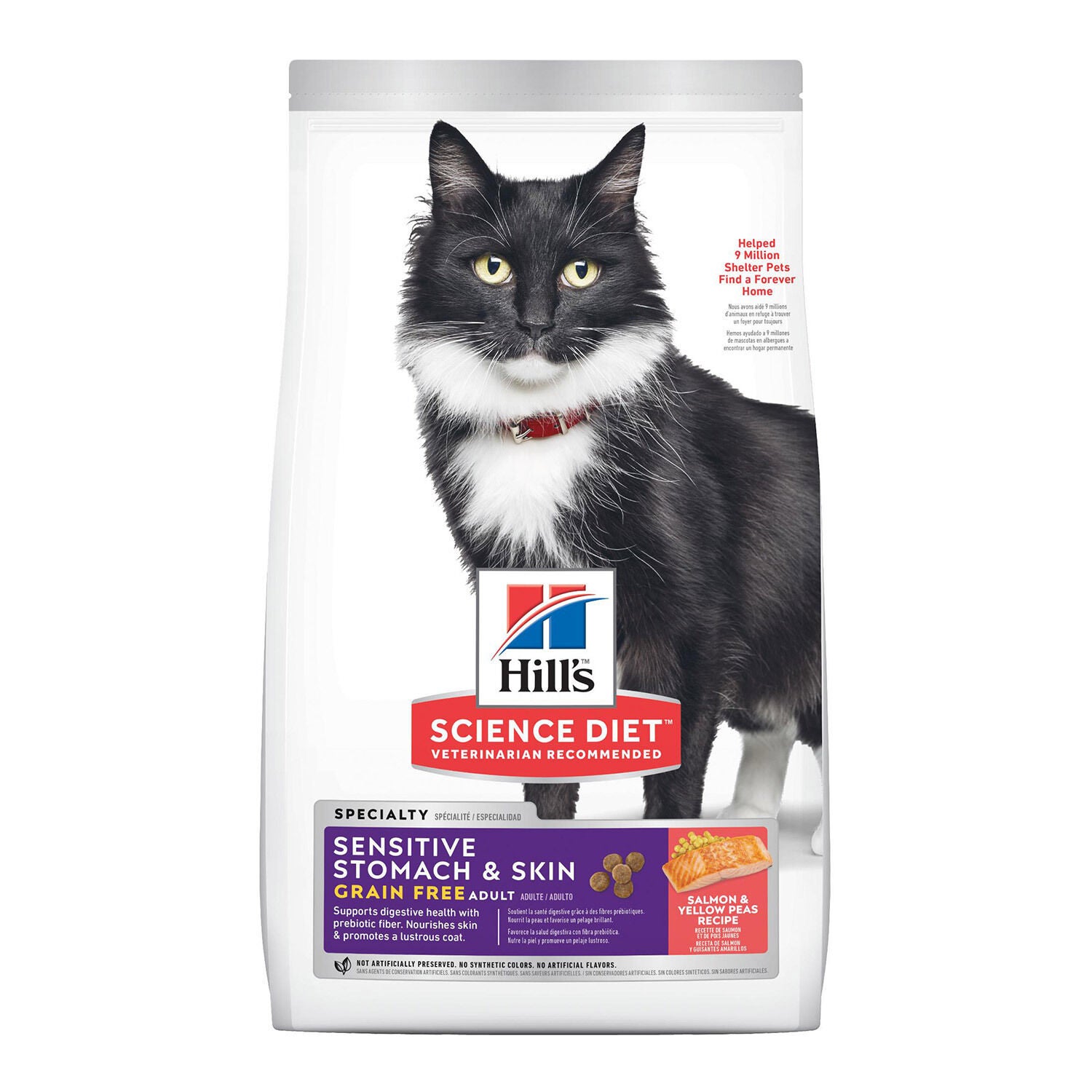
Use grain free sensitive stomach cat food that lists calories per cup or can. This helps measure intake and avoid overfeeding.
Ingredients To Avoid Or Limit
Triggers vary. Keep a food diary to learn patterns. In my work, the repeat offenders are simple.
Common triggers to test first:
- Rich meats like beef or lamb in some cats.
- High fat treats and table scraps.
- Large dose of fish oils or fish-heavy diets for cats prone to soft stool.
- Dairy. Many cats are lactose intolerant.
- Artificial colors or heavy flavor sprays.
- Too much pea protein. It can bloat some cats.
If your cat has a known allergy, avoid that protein fully for 8 to 12 weeks. During that time, use only the chosen grain free sensitive stomach cat food and no other treats.
How To Switch Your Cat Safely
A slow switch protects the gut. It also helps you spot changes.
Follow this plan:
- Days 1 to 3: 75% old food, 25% new.
- Days 4 to 6: 50% old, 50% new.
- Days 7 to 9: 25% old, 75% new.
- Day 10+: 100% new food.
Tips to reduce tummy upsets:
- Keep meals small and regular.
- Warm wet food a little to boost aroma.
- Add a teaspoon of water to dry food to aid moisture.
- Track stool, energy, and hairballs in a simple log.
If signs worsen, slow down. If vomiting or diarrhea is severe, call your vet. You may need a different grain free sensitive stomach cat food or a novel protein.
My Field Notes: What Worked With Clients And My Own Cats
With one of my cats, daily vomit stopped after I moved from a rich fish diet to a rabbit-based, grain free sensitive stomach cat food. The key was a single protein and moderate fat. I also added a spoon of warm water to each meal.
With clients, the biggest wins came from three steps. We picked a limited ingredient protein. We chose a wet or mixed wet-dry plan to raise moisture. We used a prebiotic fiber source. Most cats improved within two weeks.
What did not work was switching too fast. Treats also sabotaged results. Even a small new treat can reset the gut trial. Keep it strict and simple.

Sample Buying Guide And How To Read Labels
Use this quick checklist to choose grain free sensitive stomach cat food with confidence.
Label must-haves:
- AAFCO statement for your cat’s life stage.
- Animal protein listed first.
- Calorie content shown per cup or can.
- Taurine listed. It is essential for cats.
Formula features to weigh:
- Limited ingredient or novel protein if you suspect a trigger.
- Prebiotics and named probiotics.
- Moisture level. Wet food often helps sensitive cats.
- Moderate fat and clear fat sources.
Practical tips in the aisle:
- Compare per-calorie cost, not just bag price.
- Buy small bags at first. Fresh food digests better.
- If dry food, store in the original bag inside a sealed bin.
- Ask the brand for a full nutrient analysis and digestibility data. Responsible brands will share.
For many households, a split plan works well. Use wet grain free sensitive stomach cat food for main meals. Keep a measured portion of dry for grazing. This can help cost and calorie control.

Homemade Versus Commercial Options
Commercial diets are easier to balance. They are tested for safety and nutrients. That matters for sensitive cats.
Home cooking can help in special cases, but do it with a veterinary nutritionist. Cats need precise taurine, calcium, phosphorus, and vitamin A. Do not just remove grains and call it done. If you try home cooking, get a recipe that is complete and balanced. Recheck the plan as your cat’s weight and labs change.
For most families, commercial grain free sensitive stomach cat food is the safer first step.
Common Mistakes To Avoid
You can save time and stress by dodging these traps.
Avoid these errors:
- Switching foods too fast.
- Mixing many proteins at once. You will not know what helped.
- Ignoring moisture. Water intake matters for gut comfort.
- Skipping the AAFCO check. Balance comes first.
- Overfeeding. Extra calories can cause loose stool.
- Using many treats during a food trial.
- Expecting results in a day. Give it 10 to 14 days when signs are mild.
Stick to a plan. Keep notes. This will guide your next step if you need a different grain free sensitive stomach cat food.
Frequently Asked Questions
How do I know my cat needs grain free sensitive stomach cat food?
Watch for loose stools, vomiting, gas, or food refusal. If signs improve on a simple, grain-free, single-protein diet, it may be a good fit.
Is grain-free always better for sensitive cats?
No. Many cats do well with grains. The protein source, fat level, fiber, and moisture matter more than grains alone.
How long before I see results after switching?
Mild cases can improve in 3 to 7 days. For true food reactions, give a strict trial of 8 to 12 weeks.
Should I choose wet or dry for a sensitive stomach?
Wet food often helps due to higher moisture and softer texture. Some cats do best on a mixed plan with measured dry and wet meals.
Can probiotics help my cat’s sensitive stomach?
Yes, some strains can support gut balance and stool quality. Pick diets with named strains and proper storage, or use a vet-recommended supplement.
What if my cat refuses the new food?
Warm it slightly, add a teaspoon of water, or try a different texture. Make the switch slow and keep a calm feeding routine.
Are peas or lentils a problem in grain-free diets?
In some cats, high levels can cause gas. If you see bloat or soft stool, try a formula with different carbs.
Conclusion
You now have a clear plan to help your cat feel better. Focus on balance first, then choose a simple recipe, steady moisture, and a slow switch. Keep notes, watch stool and energy, and adjust as needed. The right grain free sensitive stomach cat food can turn daily messes into calm, clean routines.
Take the first step today. Pick one recipe that fits the checklist and start a gentle transition. Have questions or a success story to share? Leave a comment so we can help you fine-tune the plan.