

Raise free chlorine by dosing liquid chlorine, balancing pH, and retesting after circulation.
If you want crystal water that is safe, you must control chlorine right. In this guide, I show how to raise free chlorine in a swimming pool with simple steps, solid data, and tips from years of pool care.
You will learn what to add, how much to add, and when to add it, so your pool stays clear and clean.
What Is Free Chlorine and Why It Matters
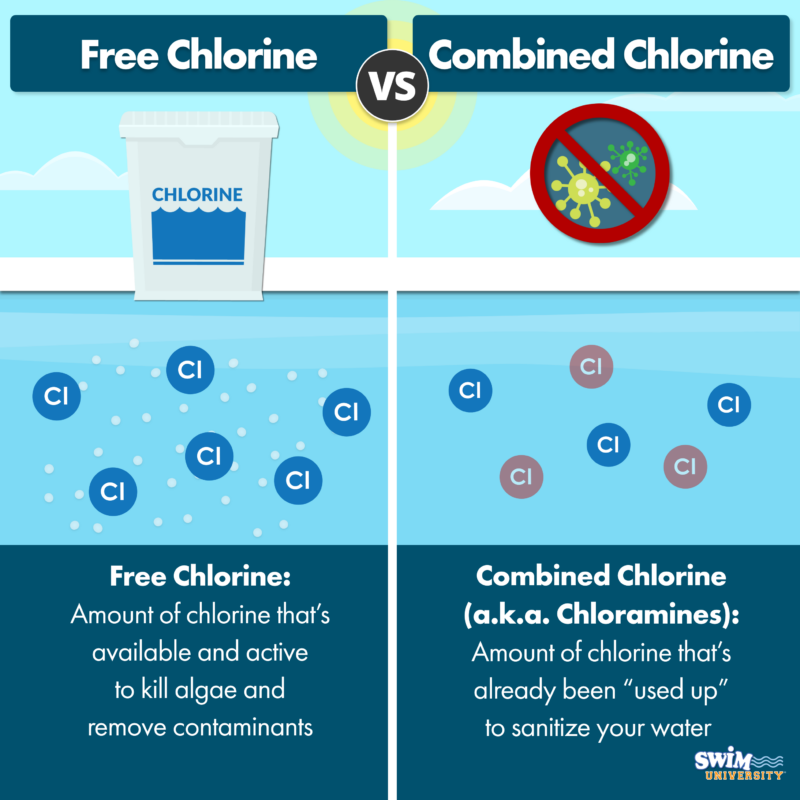
Free chlorine (FC) is the part of chlorine that can kill germs and algae. It also breaks down sweat, oils, and other waste. When FC is low, water turns dull or green, and a strong “pool smell” can show up.
Two other terms matter here:
- Combined chlorine (CC). This is used-up chlorine that makes eyes sting and gives off odor.
- Stabilizer or cyanuric acid (CYA). This shields chlorine from sun. But too much CYA makes chlorine weak.
For most home pools, target ranges are simple:
- FC: 1 to 3 ppm when CYA is 30 to 50 ppm
- CC: 0 to 0.5 ppm
- pH: 7.2 to 7.6
- CYA: 30 to 60 ppm for outdoor pools
Here is why this ties to how to raise free chlorine in a swimming pool. The right FC fights germs fast. The right CYA supports FC under sun. If CYA is high, you must add more chlorine to hit the same kill power. That is why the method to raise FC depends on your CYA level.

Test and Diagnose Before You Dose
You cannot fix what you do not measure. Test first, then act. This is the base for how to raise free chlorine in a swimming pool the right way.
What to test:
- Free chlorine and total chlorine. CC equals total chlorine minus free chlorine.
- pH. High pH makes chlorine less active.
- CYA. This sets the FC target.
- Water temperature. Warm water uses chlorine faster.
Fast targets to use:
- If CYA is 30 ppm, keep FC near 4 ppm.
- If CYA is 50 ppm, keep FC near 6 ppm.
- If CYA is 70 to 80 ppm, like many salt pools, keep FC near 7 to 9 ppm.
Two notes from field work:
- Test in the late afternoon. Sun loss is lower then, so your result is more stable.
- If CC is over 0.5 ppm, plan to shock. That is part of how to raise free chlorine in a swimming pool when water smells or looks off.
Ways to Raise Free Chlorine
There are many ways to raise FC. The best way depends on your pool size, CYA, and gear. This section gives you clear picks for how to raise free chlorine in a swimming pool without guesswork.
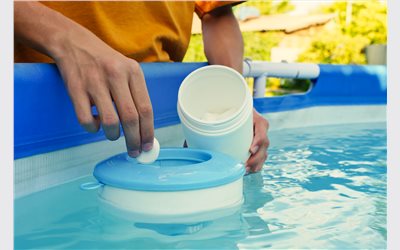
Liquid chlorine or sodium hypochlorite
- What it does. Raises FC fast. Does not add CYA or calcium.
- How much. About 1 gallon of 10% liquid chlorine adds about 10 ppm FC in 10,000 gallons.
- Pros. Simple, no residue, easy to dose.
- Cons. Loses strength over time. Store cool and dark.
Calcium hypochlorite (cal‑hypo) granules
- What it does. Raises FC and adds calcium.
- How much. About 1 pound of 65% cal-hypo adds about 7 ppm FC in 10,000 gallons.
- Pros. Strong, shelf stable.
- Cons. Adds calcium. Can cloud water if calcium is high.
Dichlor and trichlor
* What they do. Raise FC and add CYA.
- Use case. Good when CYA is low. Not good if CYA is already high.
- Notes. 1 pound of dichlor adds about 5.5 ppm FC and about 5 ppm CYA in 10,000 gallons. Trichlor adds even more CYA by weight.
Saltwater chlorine generator (SWG)
- What it does. Makes chlorine from salt in the pool.
- How to raise FC. Use the boost or super‑chlorinate mode. Or raise cell output and run time.
- Tip. Clean the cell if scale is present. A dirty cell makes less chlorine.
Non‑chlorine shock (MPS)
- What it does. Oxidizes waste but does not raise FC.
- Use case. Helps reduce CC. Use when you want to swim soon after.
All of these methods can be part of how to raise free chlorine in a swimming pool. Pick the one that fits your water balance and goals.

Step‑by‑Step: Raise Free Chlorine Now
Follow this plan to act with care and speed. It is the exact path I use on service calls. It meets the need for how to raise free chlorine in a swimming pool with clear steps.
- Test and record
- Measure FC, CC, pH, and CYA.
- Note pool volume in gallons.
- Set targets
- Aim for an FC level that matches your CYA.
- If CC is over 0.5 ppm or algae is present, plan a shock level.
- Balance pH first
- Lower pH to 7.2 to 7.4 before a big chlorine dose.
- Acid makes chlorine work better at the start.
- Choose the product
- Use liquid chlorine when you do not want more CYA or calcium.
- Use dichlor or trichlor only if CYA is low and you want it higher.
- Use cal‑hypo if calcium is low and you want a strong hit.
- Calculate the dose
- For liquid 10%: To add 2 ppm FC in 10,000 gallons, use about 0.2 gallons.
- For cal‑hypo 65%: To add 2 ppm FC in 10,000 gallons, use about 0.3 pounds.
- Product strength varies. Check the label and adjust.
- Add it the right way
- Run the pump. Pour liquid slowly in front of a return. Brush the area.
- For solids, pre‑dissolve in a bucket of pool water. Broadcast around the deep end. Brush to avoid bleaching.
- Keep the cover off when shocking.
- Circulate and retest
- Circulate for 30 to 60 minutes for small doses. Wait 4 to 8 hours for big doses.
- Retest FC and pH. Top up if needed.
- If water is cloudy or green
- Raise FC to shock level based on CYA and hold it there.
- Test and dose often until CC is 0.5 ppm or less and water is clear.
Example dose
- Pool size: 15,000 gallons. Target rise: 2 ppm FC. Product: 10% liquid.
- 1 gallon raises 6.7 ppm in 15,000 gallons.
- Needed: about 0.3 gallons, which is about 38 ounces.
This is the simple core of how to raise free chlorine in a swimming pool. Test, plan, dose, and verify.
Safety first
- Wear eye and hand protection.
- Never mix chemicals.
- Add chemical to water, not water to chemical.
Special Cases and Troubleshooting
Here are fixes for stubborn cases. These points come from on‑site work and align with best practice. They also show how to raise free chlorine in a swimming pool when standard steps fail.
High CYA, low FC
- FC will not hold. Partial drain and refill to lower CYA.
- Then use liquid chlorine to reach target FC.
High CC or strong odor
- Shock to the right level for your CYA.
- Keep pump on and brush. Sunlight helps break down CC.
Algae bloom
- Brush walls and floor first.
- Shock and hold. Backwash or clean the filter as needed.
Salt pool makes little chlorine
- Check salt level, flow, and cell scale.
- Raise output and run time. Use liquid chlorine to catch up fast.
Hot sun and heavy use
- Dose in the evening.
- Use a solar cover at night to cut loss.
Metals in water
- Avoid huge shock hits. Use a metal control product first.
- Then raise FC in steps while you filter.
Cold water
- Demand drops in cold. Reduce dosing but keep FC in range.
- Keep a log. Adjust as the season shifts.
Each case affects how to raise free chlorine in a swimming pool. Solve the root cause, then set a steady plan.

A Simple Maintenance Plan That Works
A steady plan beats big fixes. This keeps FC in the safe zone and makes life easy. It is also the cheapest way for how to raise free chlorine in a swimming pool over time.
Daily or every other day
- Test FC and pH.
- Add liquid chlorine as needed to hit your target.
- Skim and empty baskets.
Weekly
- Test CYA and alkalinity.
- Brush walls and steps.
- Clean the filter if pressure is high.
Targets that hold
- Keep FC at about 7.5% of your CYA as a rule of thumb.
- Example: CYA 40 ppm. Keep FC near 3 ppm or higher.
- Never let FC drop below the minimum for your CYA.
Smart habits
- Dose at dusk to cut sun loss.
- Keep a simple log. Note weather, bather load, and doses.
- Use clear labels and a safe store spot for chemicals.
These habits lock in how to raise free chlorine in a swimming pool with less stress and cost.

Safety and Storage Essentials
Chlorine is safe when you use it right. Treat it with care. This protects you and your pool.
Storage
- Keep cool, dry, and away from sun.
- Store liquid chlorine off the floor and away from acids.
- Seal lids tight. Rotate stock so old jugs get used first.
Handling
- Wear gloves and eye gear.
- Open jugs in fresh air. Avoid splash back.
- Rinse tools and buckets with pool water after use.
Disposal
- Do not pour old chemicals down drains or on soil.
- Follow local rules for disposal or drop‑off.
Safe habits support every method for how to raise free chlorine in a swimming pool. Safety keeps your gear and your water in top shape.
Frequently Asked Questions of how to raise free chlorine in a swimming pool
How fast can I raise free chlorine?
Most pools show a change within 30 to 60 minutes of dosing. For shocks or big doses, allow 4 to 8 hours and retest.
Will non‑chlorine shock raise free chlorine?
No. It oxidizes waste but does not add free chlorine. It can help clear CC so your chlorine works better.
Is it better to add chlorine in the morning or evening?
Evening is best to limit sun loss. Add in the morning only if water needs a fast fix before swimmers.
How do I know if CYA is too high?
If FC vanishes fast and CYA is over 80 ppm, it is likely too high. Do a partial drain and refill, then retest.
Can I swim right after I add chlorine?
You can swim when FC is in the safe range for your CYA and the pump has mixed the water. For big doses, wait a few hours and retest.
What if my pool still turns green after I add chlorine?
You likely need to shock to the right level for your CYA and hold it there. Brush, filter, and retest often until clear.
How do I calculate how much liquid chlorine to add?
Know your pool volume and target ppm rise. For 10% liquid, 0.2 gallons adds about 2 ppm in 10,000 gallons.
Conclusion
A clean, safe pool is simple when you follow a clear plan. Test first, set targets that match CYA, add the right product, and retest to confirm. That is the proven path for how to raise free chlorine in a swimming pool and keep it there.
Start today. Do one test. Make one small dose. Log the result. Small, steady steps give you clear water, less cost, and less work. Want more help? Subscribe for weekly tips or leave a comment with your pool size and current readings, and I will help you dial in your dose.


